Why Did the Founders Divide Government Power?
The founders split power into three branches and gave each one ways to check the others because they believed concentrated power leads to abuse. Texas divides power even further.

· 3 min read

The short answer
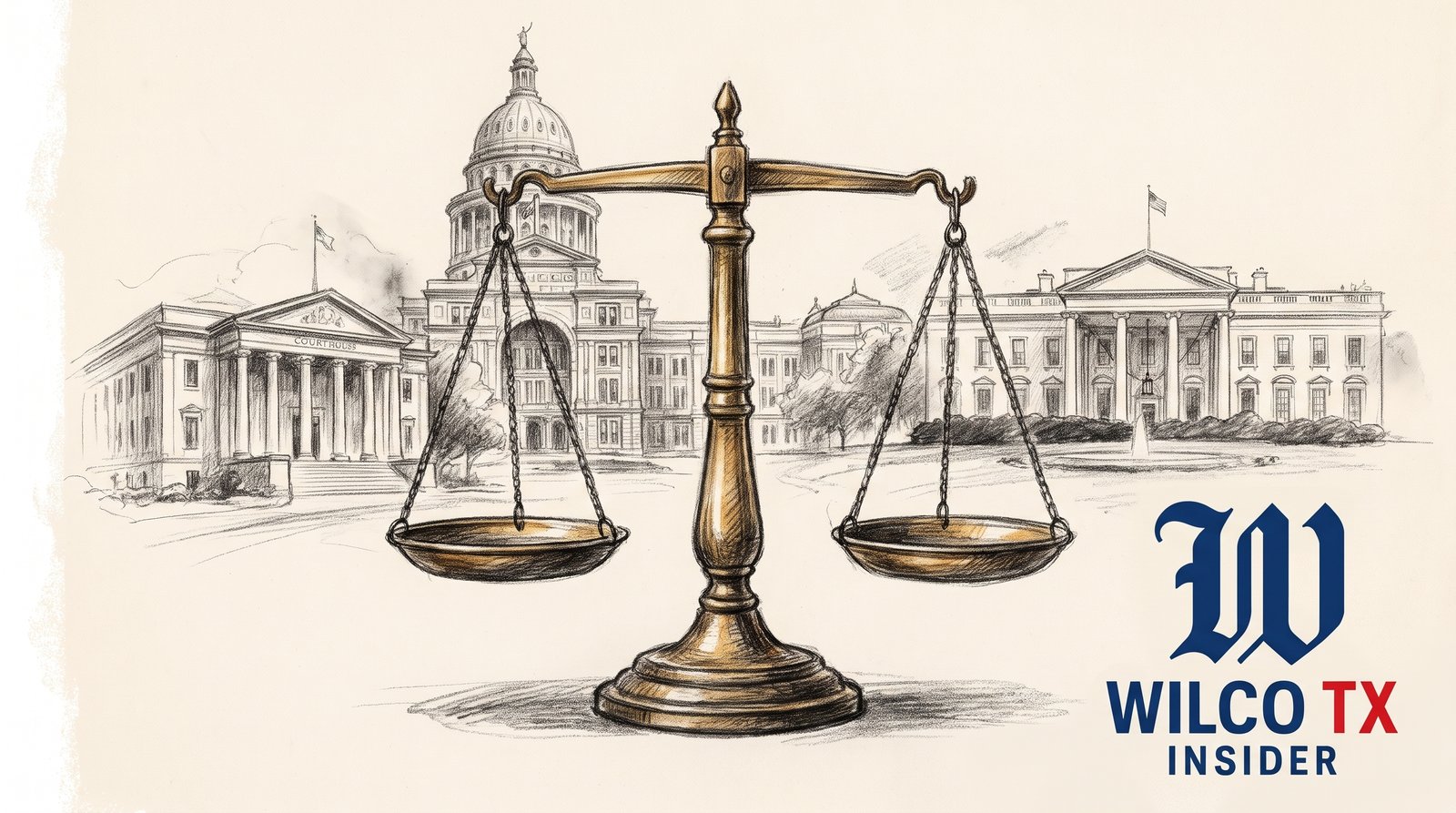
The founders divided government power because they did not trust any one person or group to hold all of it. They split the national government into three branches (legislative, executive and judicial) and gave each branch tools to slow down or block the others. These ideas are called separation of powers and checks and balances.
What the Constitution says
The structure is built into the first three articles of the U.S. Constitution:
- Article I: "All legislative Powers herein granted shall be vested in a Congress of the United States, which shall consist of a Senate and House of Representatives."
- Article II: "The executive Power shall be vested in a President of the United States of America."
- Article III: "The judicial Power of the United States, shall be vested in one supreme Court, and in such inferior Courts as the Congress may from time to time ordain and establish."
What it means
James Madison explained the thinking in the Federalist Papers. In Federalist No. 47 he wrote that putting all legislative, executive and judicial power in the same hands "may justly be pronounced the very definition of tyranny." In Federalist No. 51 he argued that each branch needed the means and the motive to resist the others: "Ambition must be made to counteract ambition."
So the Constitution builds in friction on purpose. Some of the main checks:
- The president can veto bills. Congress can override a veto with a two-thirds vote of both chambers.
- The Senate must approve many presidential appointments, including federal judges, and must approve treaties by a two-thirds vote.
- Congress controls spending and can impeach and remove officials.
- Federal courts can rule that a law or government action violates the Constitution. The Supreme Court described this power in Marbury v. Madison (1803).
- Judges serve "during good Behaviour," which in practice means they don't face elections, so they can rule without worrying about losing their jobs.
Real-world example
When Congress and the president disagree about a budget, neither side can simply impose its will. That can produce standoffs and deadlines. The founders accepted that slowness as the price of making sure major decisions have broad agreement.
What government can and cannot do
No branch is supposed to do another branch's job. Congress writes laws but doesn't enforce them. The president enforces laws but can't pass them alone. Courts decide cases but don't write laws or run agencies. Where exactly those lines fall is one of the most debated questions in American law, and the courts revisit it often.
How Texas does it
Article 2 of the Texas Constitution divides state power into three "distinct departments" and says no person in one department shall exercise powers belonging to another, except where the constitution allows it.
Texas also splits the executive branch itself. Voters separately elect the governor, lieutenant governor, attorney general, comptroller, land commissioner and agriculture commissioner. That is called a plural executive. The Legislature meets in regular session only once every two years, for up to 140 days. The governor can veto bills and can strike individual spending items from the budget (a line-item veto).
Why this matters in Williamson County
County government follows the same instinct. Instead of one county boss, voters elect a county judge, commissioners, sheriff, prosecutors, clerks and a tax assessor-collector separately. The Commissioners Court controls the budget, but it doesn't run the sheriff's office or decide criminal cases. Those divided lines are why it matters to know which official is responsible for what.
The bottom line
The founders chose a government that argues with itself. Dividing power makes government slower, but it makes it much harder for any one person or faction to take control.