What Does "We the People" Actually Mean?
The first three words of the U.S. Constitution say that government gets its power from the people, not the other way around. Texas says the same thing in its own constitution.

· 3 min read

The short answer
"We the People" are the first three words of the U.S. Constitution. They announce who is in charge. The Constitution was not handed down by a king or created by the states acting alone. It was written in the name of the people, and its power comes from them.
What the Constitution says
The opening paragraph is called the Preamble. Here it is in full:
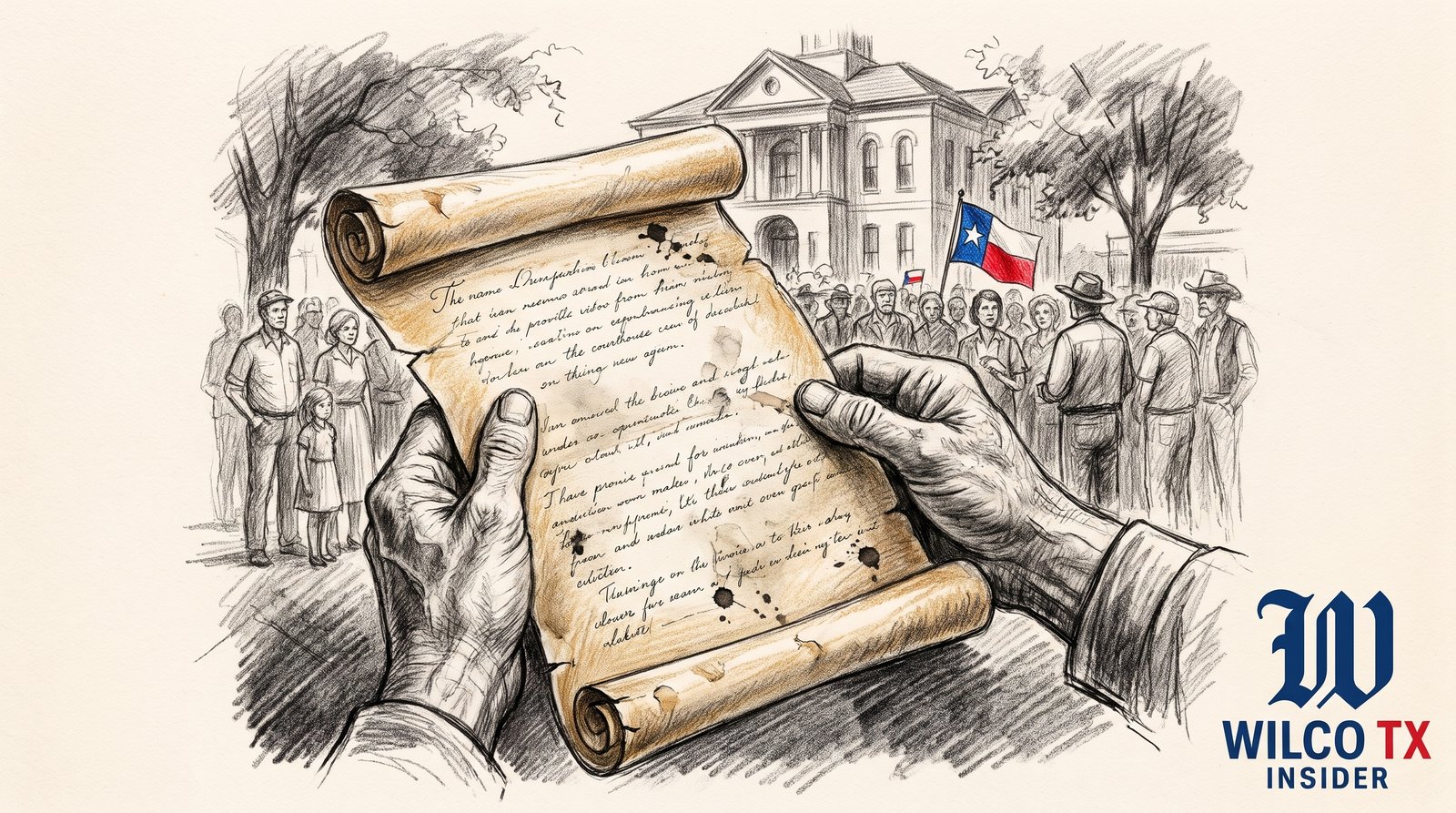
We the People of the United States, in Order to form a more perfect Union, establish Justice, insure domestic Tranquility, provide for the common defence, promote the general Welfare, and secure the Blessings of Liberty to ourselves and our Posterity, do ordain and establish this Constitution for the United States of America.
Read it as one long sentence with a subject, a list of goals and an action. The subject is "We the People." The goals are a better union, justice, peace at home, defense, the general welfare and liberty. The action is "do ordain and establish," which means the people are creating this government.
What it means
Before 1787, the country ran under the Articles of Confederation, an agreement among the states. The Constitution took a different approach. It was sent to special ratifying conventions in each state, elected for that purpose, instead of only to state legislatures. That choice matched the opening words: the people themselves were approving the new government.
The big idea behind those three words is called popular sovereignty. It means the final authority in the country belongs to the people. Officials hold power on loan. Voters choose them, and the Constitution sets limits on what they can do with that power.
One detail surprises many readers: the Preamble does not, by itself, give anyone legal rights or give the government any powers. Courts treat it as a statement of purpose. The actual rules are in the articles and amendments that follow. The Preamble tells you why they were written.
Real-world example
When you vote for a county commissioner, sign a petition, speak at a city council meeting or serve on a jury, you are acting as part of "We the People." Each of those is a way the people either choose who holds power or check how it is used.
What government can and cannot do
Because power starts with the people, government can only do what the people, through the Constitution and laws, allow it to do. The national government has the powers the Constitution lists. The Tenth Amendment says the rest belong to the states "or to the people." Government also cannot take away the rights protected in the Bill of Rights and later amendments, even if a majority wants it to.
"We the People" has also grown over time. In 1787 many Americans could not vote, including women and enslaved people. Later amendments widened who takes part, including the 15th Amendment (race), the 19th Amendment (women) and the 26th Amendment (voters age 18 and older).
Why this matters in Williamson County
Texas uses the same idea. Article 1, Section 2 of the Texas Constitution says: "All political power is inherent in the people, and all free governments are founded on their authority, and instituted for their benefit."
In Williamson County that principle shows up every time residents elect a county judge, commissioners, a sheriff, city council members and school board trustees, and every time voters approve or reject a bond or a change to the Texas Constitution. The people here are not only governed. They are the source of the government's authority.
The bottom line
"We the People" means the government works for the people and gets its power from them. The rest of the Constitution explains how that power is divided, limited and kept accountable. The rest of this section explains what that looks like in Williamson County today.