Federal vs. Texas vs. Williamson County: Who Controls What?
Your passport, your driver's license, your jail, your zoning and your school tax rate all come from different governments. Here is how the layers fit together, and who has the final say when they clash.

· 3 min read

The short answer
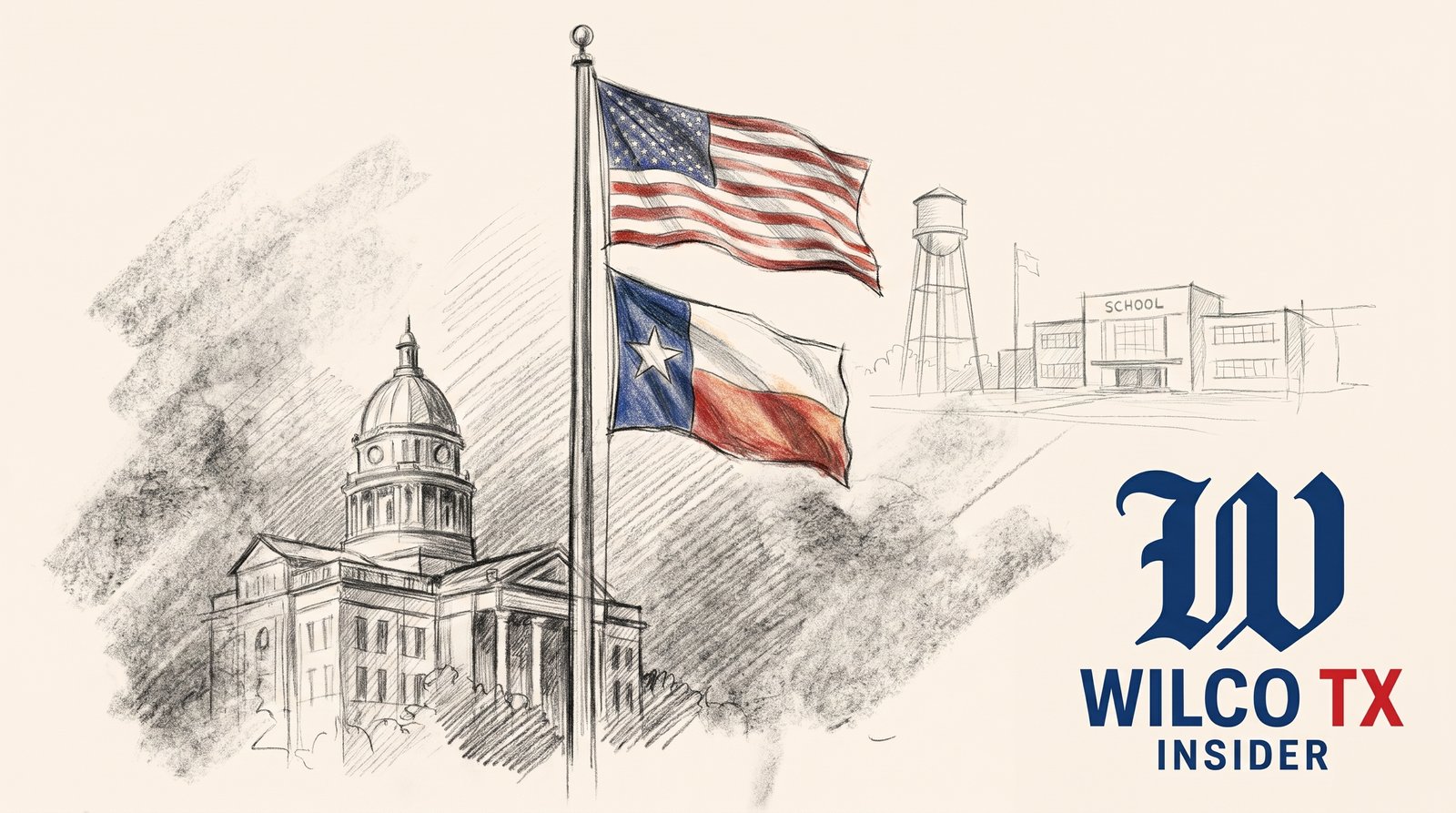
If you live in Williamson County, at least four governments make decisions about your life: the federal government, the State of Texas, the county and your school district. Most residents also live in a city, and many live in special districts. Each one has its own job. When federal and state law truly conflict, federal law wins. When state and local law conflict, state law wins.
What the Constitution says
The U.S. Constitution lists the powers of the national government, such as coining money, regulating trade between states, running the post office and declaring war. The Tenth Amendment covers everything else:
The powers not delegated to the United States by the Constitution, nor prohibited by it to the States, are reserved to the States respectively, or to the people.
The Supremacy Clause in Article VI says the Constitution and federal laws made under it are "the supreme Law of the Land." Sharing power this way between the nation and the states is called federalism.
Cities, counties and school districts are not mentioned in the U.S. Constitution at all. They are created by the state, and they have only the powers Texas gives them.
Who controls what
- Federal government: passports and immigration, the military, Social Security and Medicare, the federal income tax, interstate highways' funding rules, federal courts and federal crimes.
- State of Texas: driver's licenses, most criminal laws (the Penal Code), state highways through TxDOT, public school standards, the rules for elections and the rules every county, city and school district must follow. Texas has no state property tax and no state personal income tax.
- Williamson County: the jail and sheriff, county and justice courts, elections, property and marriage records, vehicle registration, and county roads, especially outside city limits.
- Cities: police, zoning and land use, water and wastewater, trash pickup, streets and parks inside city limits.
- School districts: public schools, teachers, school buildings and the school property tax rate, all within limits set by the state.
- Special districts: single-purpose governments like municipal utility districts (MUDs), emergency services districts (ESDs) and water districts. Many have elected boards and their own tax rates.
Real-world example: your property tax bill
Your property tax bill is the clearest picture of the layers. The Williamson Central Appraisal District sets your home's taxable value. Then each local government that covers your address (the county, your city, your school district and any special districts) sets its own tax rate. The county tax assessor-collector collects the combined bill and sends each government its share. The State of Texas writes the rules for the whole process, including exemptions and limits on how much a local government's tax revenue and a homestead's taxable value can grow each year without voter approval, but does not collect a property tax itself.
What each government can and cannot do
A Texas city cannot pass a law that conflicts with state law. Article 11, Section 5 of the Texas Constitution lets cities with more than 5,000 residents adopt home-rule charters, but says no charter or ordinance may be inconsistent with the Constitution or general laws of Texas. Counties have even less room: they can only do what a state law authorizes. And a state cannot pass a law that violates the U.S. Constitution.
Where the lines fall is not always obvious, and it changes. The Texas Legislature regularly passes laws that expand or limit what cities and counties may do. Courts settle disputes about which government has authority.
Why this matters in Williamson County
Growth brings these layers into the open. A new subdivision may need a plat approved by a city or the county, water from a MUD and new schools from an ISD. A road project might be federal money, a TxDOT design and a county or city contract. Knowing which layer is responsible tells you which meeting to attend and which officials to contact.
The bottom line
Government in Williamson County is a stack, not a single building. The U.S. Constitution sits on top, Texas law comes next, and the county, cities, school districts and special districts work within the limits the state sets.