What Does Freedom of Speech Actually Protect?
The First Amendment stops the government from punishing you for what you say, with a few narrow exceptions. It does not apply to private employers or businesses. Texas law also guarantees your chance to speak at public meetings.

· 3 min read

The short answer
Freedom of speech means the government generally cannot punish you, censor you or force you to say something because of your views. It protects unpopular and offensive speech, too. It does not stop private businesses, employers or social media companies from setting their own rules, and it does not protect a few narrow categories like true threats and fraud.
What the Constitution says
The First Amendment reads:
Congress shall make no law respecting an establishment of religion, or prohibiting the free exercise thereof; or abridging the freedom of speech, or of the press; or the right of the people peaceably to assemble, and to petition the Government for a redress of grievances.
It says "Congress," but after the 14th Amendment the Supreme Court applied it to state and local governments too. That includes Texas, Williamson County, your city council and your public school district.
Texas has its own version in Article 1, Section 8 of the Texas Constitution: "Every person shall be at liberty to speak, write or publish his opinions on any subject, being responsible for the abuse of that privilege; and no law shall ever be passed curtailing the liberty of speech or of the press."
What it protects
- Criticizing the government and public officials, including harshly.
- Political signs, protests, petitions and peaceful demonstrations.
- Speech many people find offensive or wrong.
- Symbolic speech, like wearing an armband or displaying a flag.
- The right not to speak. The government generally cannot force you to say or endorse a message.
What it does not protect
The Supreme Court has recognized a short list of exceptions. They are drawn narrowly:
- Incitement: speech intended and likely to cause imminent lawless action.
- True threats: serious threats of violence against a person.
- Defamation: false statements of fact that damage someone's reputation. Public officials have to meet a higher bar to win these cases.
- Fraud and speech that is part of a crime.
- Obscenity, which has a specific legal definition.
The government can also set reasonable, content-neutral rules on the time, place and manner of speech, like noise limits or permits for a parade, as long as the rules don't target a viewpoint.
Finally, the First Amendment limits government, not private parties. A private employer can generally discipline an employee for what they say at work. A private store can ask you to leave. A social media company can remove posts. (Other laws may apply in some of those situations, but the First Amendment does not.)
Real-world example: public comment
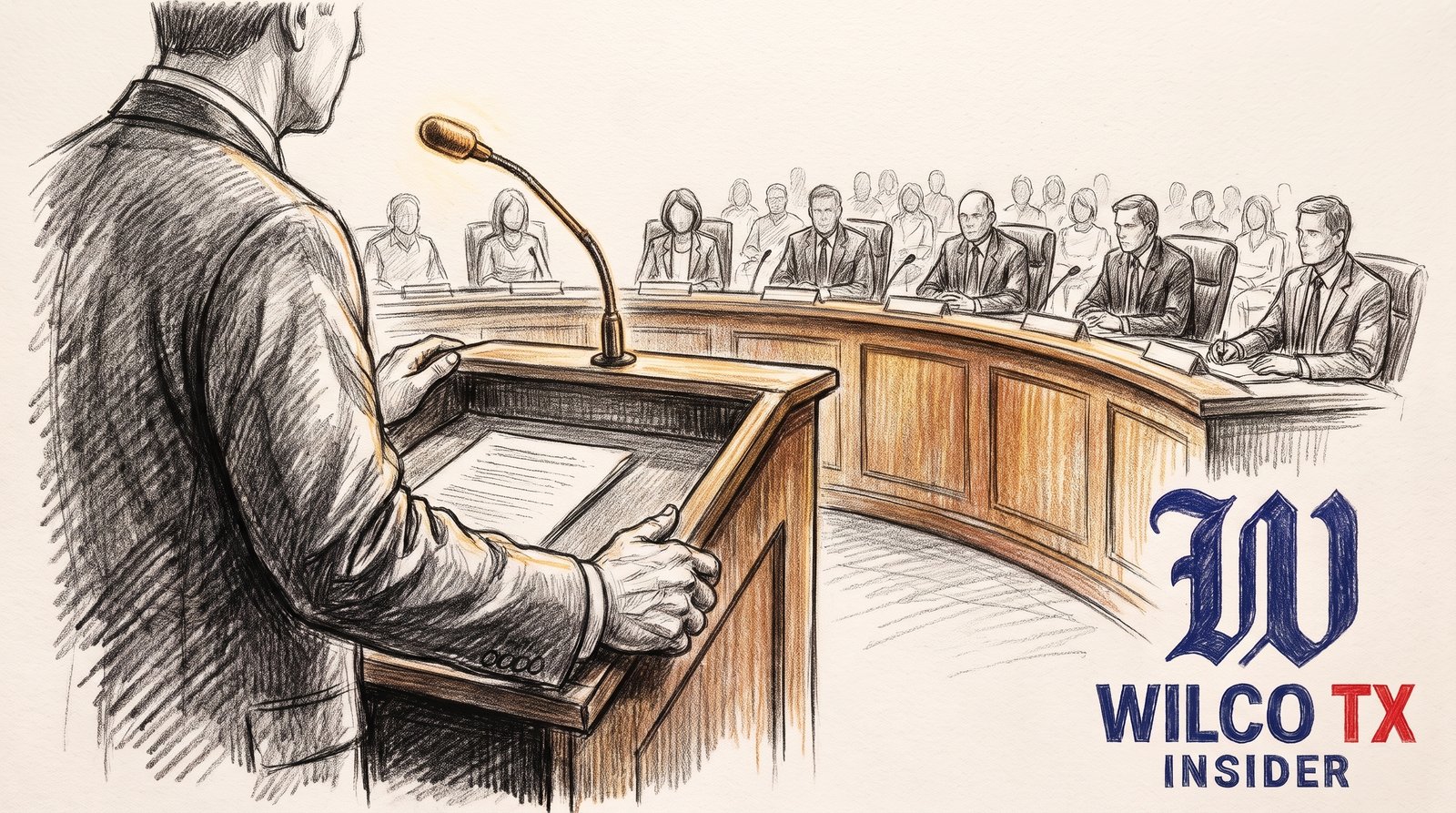
Texas law gives you a specific right to speak at many local government meetings. Under Texas Government Code Section 551.007, a governmental body must let each member of the public who wants to address it about an agenda item speak before or during the body's consideration of that item. The body may adopt reasonable rules, such as time limits. The same law says the body may not prohibit public criticism of the body itself.
Why this matters in Williamson County
Commissioners Court, city councils and school boards across Williamson County hold public comment at their meetings. Residents use it to speak about rezonings, budgets, tax rates and school policies. The Open Meetings Act keeps that door open for agenda items, and the First Amendment and the Texas Constitution limit the government from setting comment rules based on what viewpoint you express. Bodies can still set rules about how and when.
The bottom line
Free speech protects you from the government, not from criticism or private consequences. The exceptions are narrow, and the default is that the government must tolerate speech it dislikes.