
Rodeo 101: Every Rodeo Event Explained
Never been to a rodeo? Here's what you're watching at the Williamson County Rodeo in Taylor, how each event works and how the winners are decided.
Rough stock events: 8 seconds to glory
These are the riding events. Two judges each give up to 25 points for the rider and up to 25 for the animal, so a perfect score is 100. Most winning rides score in the 80s. If the rider falls off or breaks a rule before the whistle, there's no score at all. A rider who draws a hard-bucking animal has a better shot at a high score, which is why you'll hear cowboys say they "drew well."
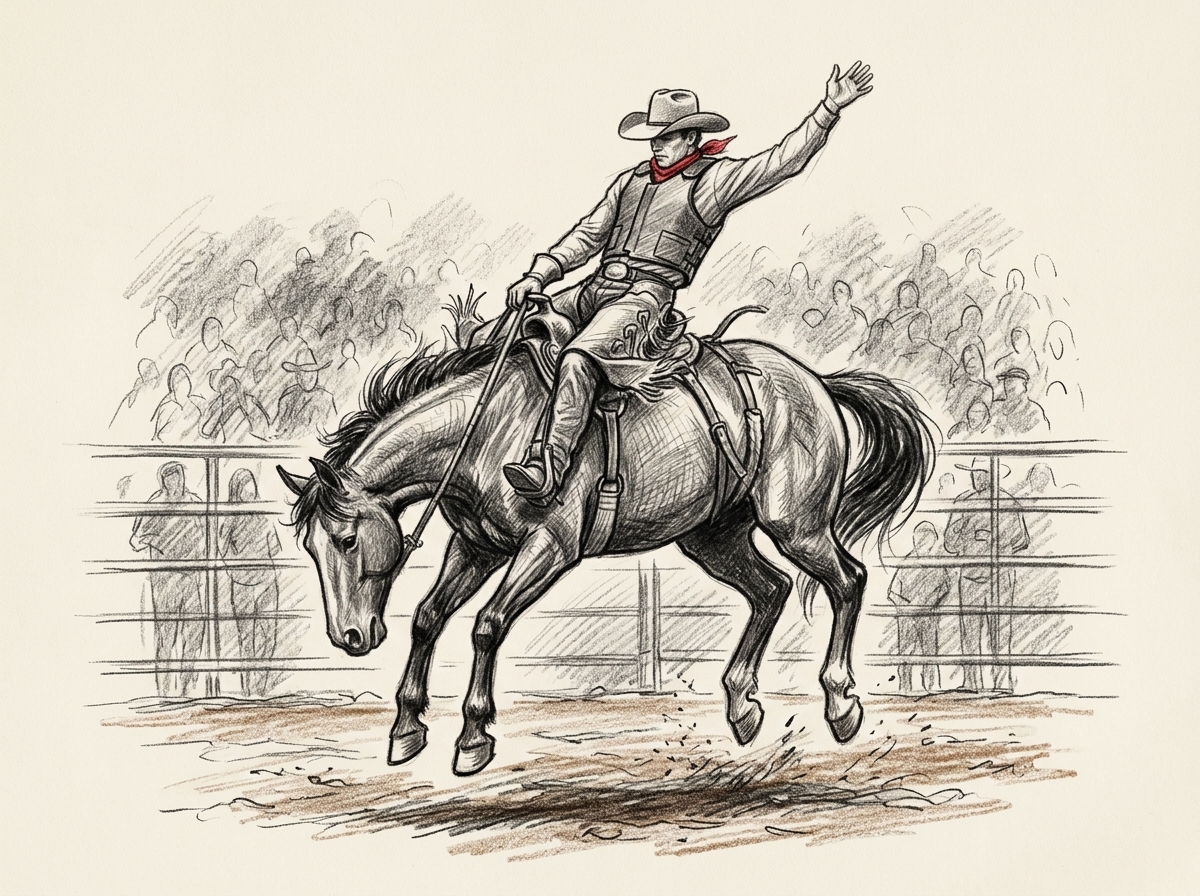 🐎
Bareback riding
A cowboy rides a bucking horse with no saddle and no reins, hanging on to a leather rigging (it looks like a suitcase handle) with one hand. Many riders call it the most physically punishing event in rodeo.
How it's scored: The ride has to last 8 seconds. Two judges each score the rider and the horse, for a total of up to 100 points. The rider's free hand can't touch the horse or himself, and his feet have to be over the horse's shoulders as it leaves the chute (the "mark out" rule).
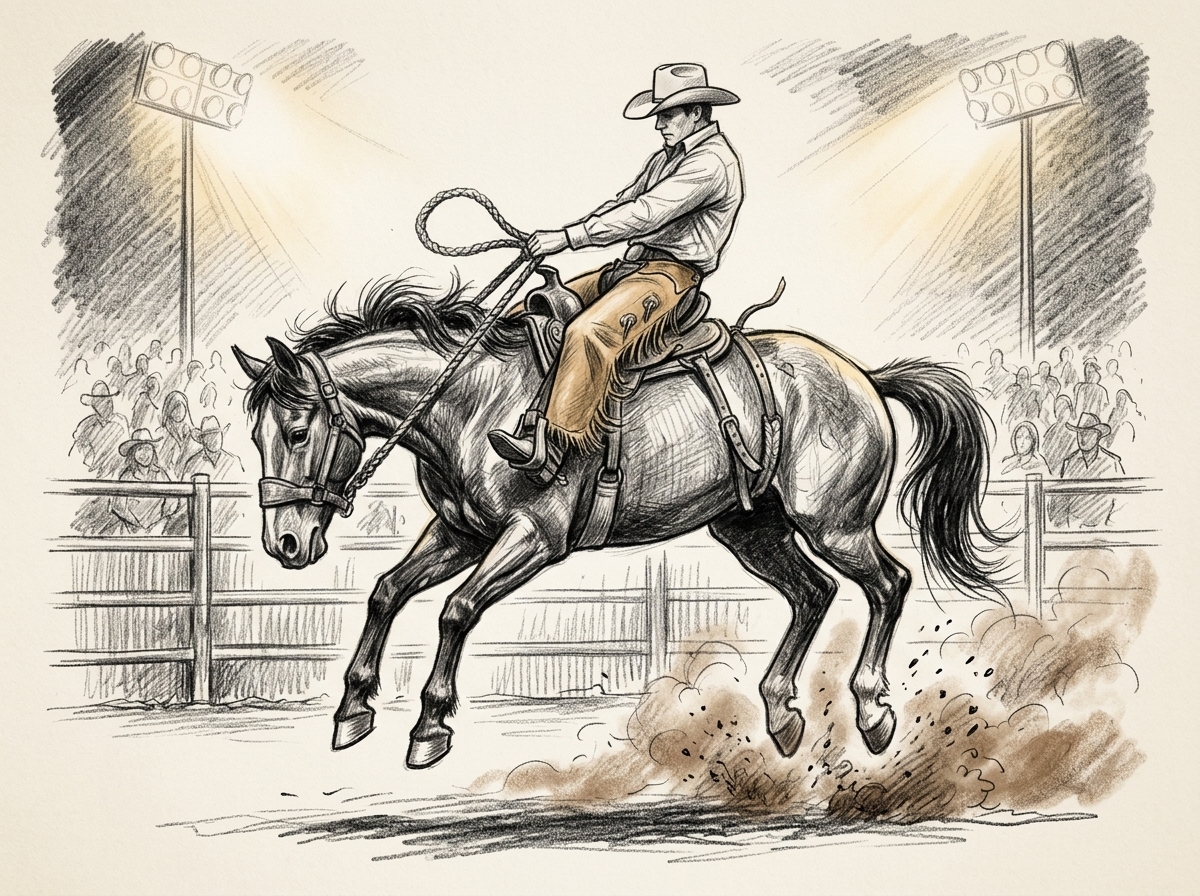 🏇
Saddle bronc riding
Rodeo's classic event, born from breaking ranch horses. The cowboy rides a bucking horse with a special saddle and holds a single thick rein. Style counts: the best rides look smooth and rhythmic, with the rider's feet sweeping from the horse's neck back toward the saddle in time with each jump.
How it's scored: Same as bareback: 8 seconds, up to 100 points from two judges, free hand off the horse and a mark out from the chute.
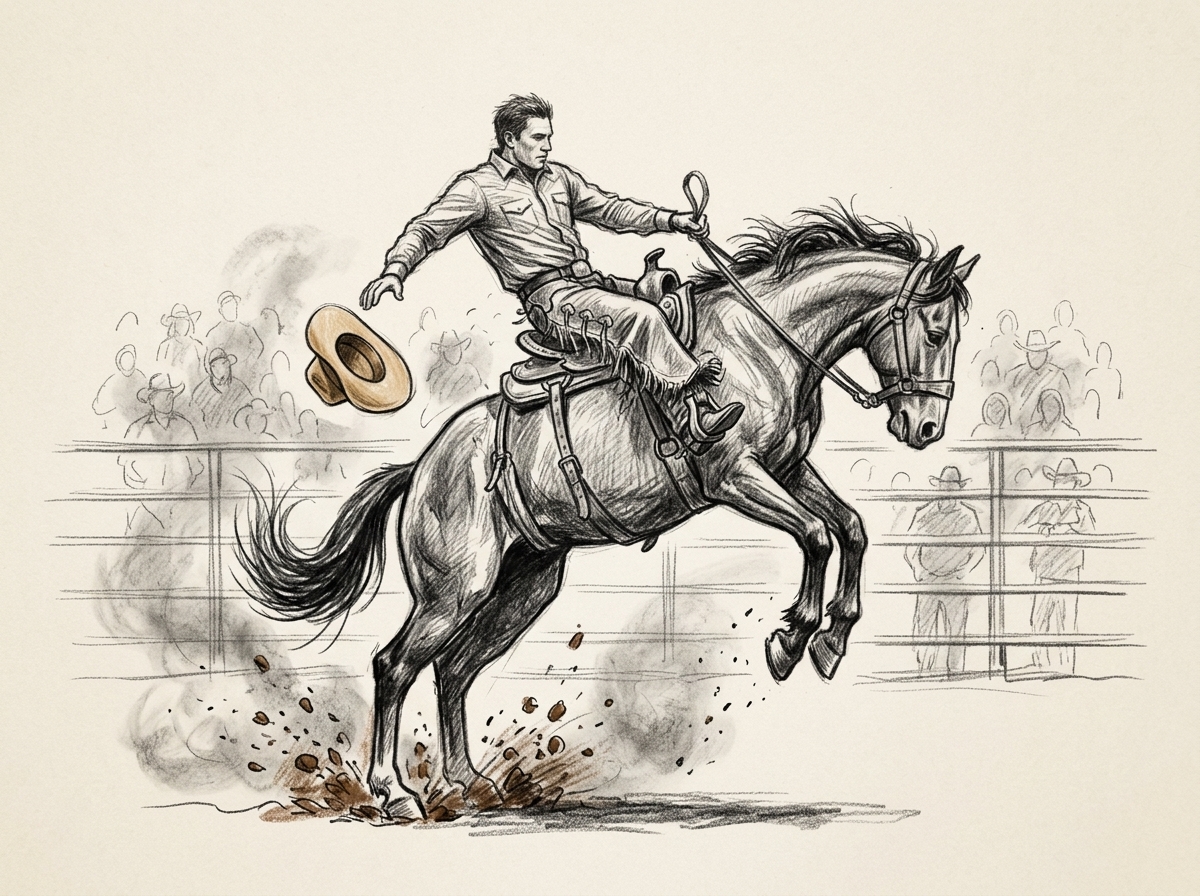 🤠
Ranch bronc riding
A newer event that's popular at UPRA rodeos. Cowboys ride bucking horses in an everyday working ranch saddle instead of a specialized bronc saddle, closer to how bronc riding looked on real ranches.
How it's scored: 8 seconds, scored like the other riding events: points for the rider's control and for how hard the horse bucks.
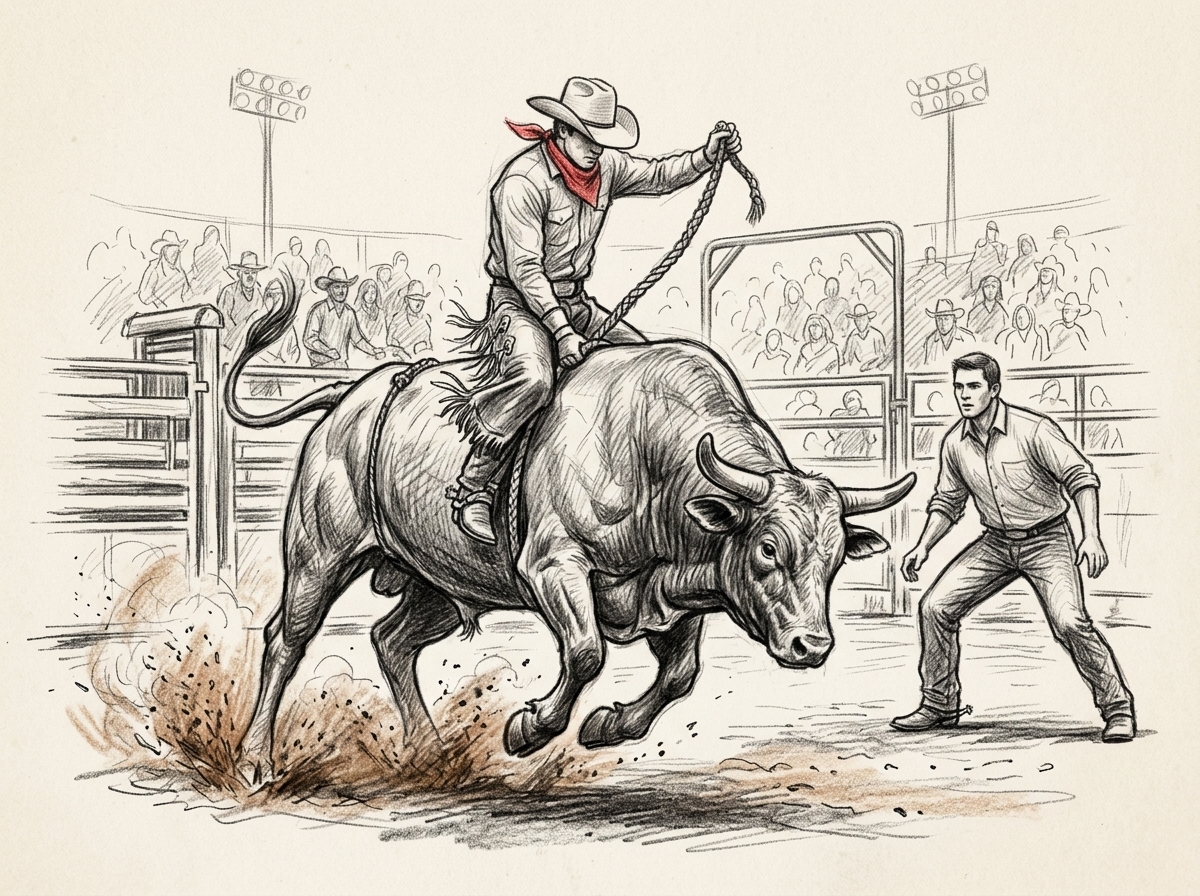 🐂
Bull riding
The crowd favorite and usually the last event of the night. The rider holds a flat braided rope wrapped around a bull that can weigh more than 1,500 pounds, with one hand, for 8 seconds.
How it's scored: Up to 100 points from two judges: half for the rider's control, half for how hard the bull bucks and spins. No mark out rule. Watch the bullfighters: their job is to get between the bull and a rider who has fallen.
Timed events: beat the clock
These events come from everyday ranch work: catching, roping and handling cattle. The animal gets a head start out of the chute, a barrier rope keeps the rider back until then, and the clock stops when the job is done. Winning times are often just a few seconds.
 🪢
Tie-down roping
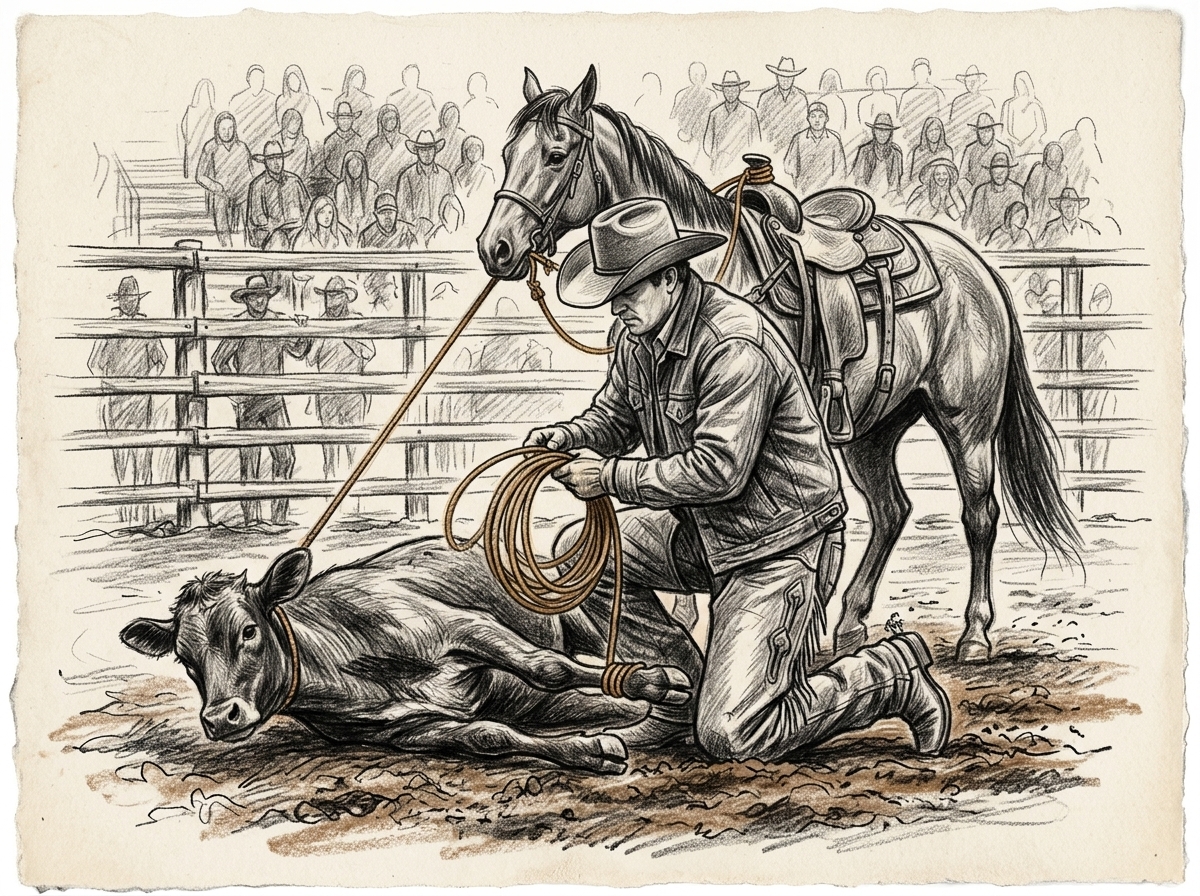
Also called calf roping, it comes straight from ranch work. The cowboy ropes a running calf from horseback, jumps off, runs down the rope, flips the calf on its side and ties three legs together with a short rope called a piggin' string. His horse keeps the rope tight the whole time.
How it's scored: Fastest time wins. The calf has to stay tied for 6 seconds after the cowboy gets back on his horse. Leaving the box too early (breaking the barrier) adds a 10-second penalty.
 ⏱️
Breakaway roping
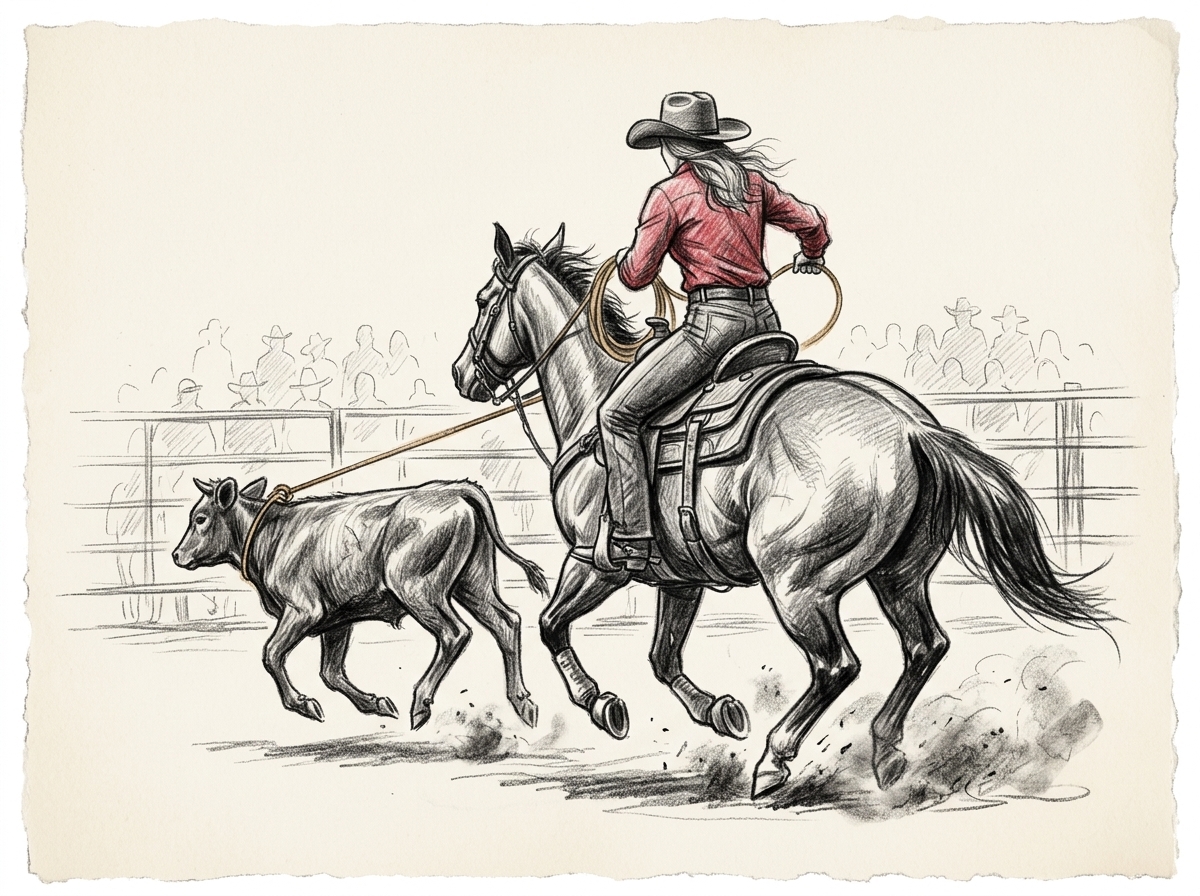
One of the fastest-growing events in rodeo, mostly for women. The roper catches a running calf around the neck; the rope is tied to the saddle horn with a string and a small flag, and the run ends when the rope breaks away from the saddle.
How it's scored: Runs often take just 2 to 3 seconds. Fastest time wins; breaking the barrier adds 10 seconds.
 💪
Steer wrestling (bulldogging)
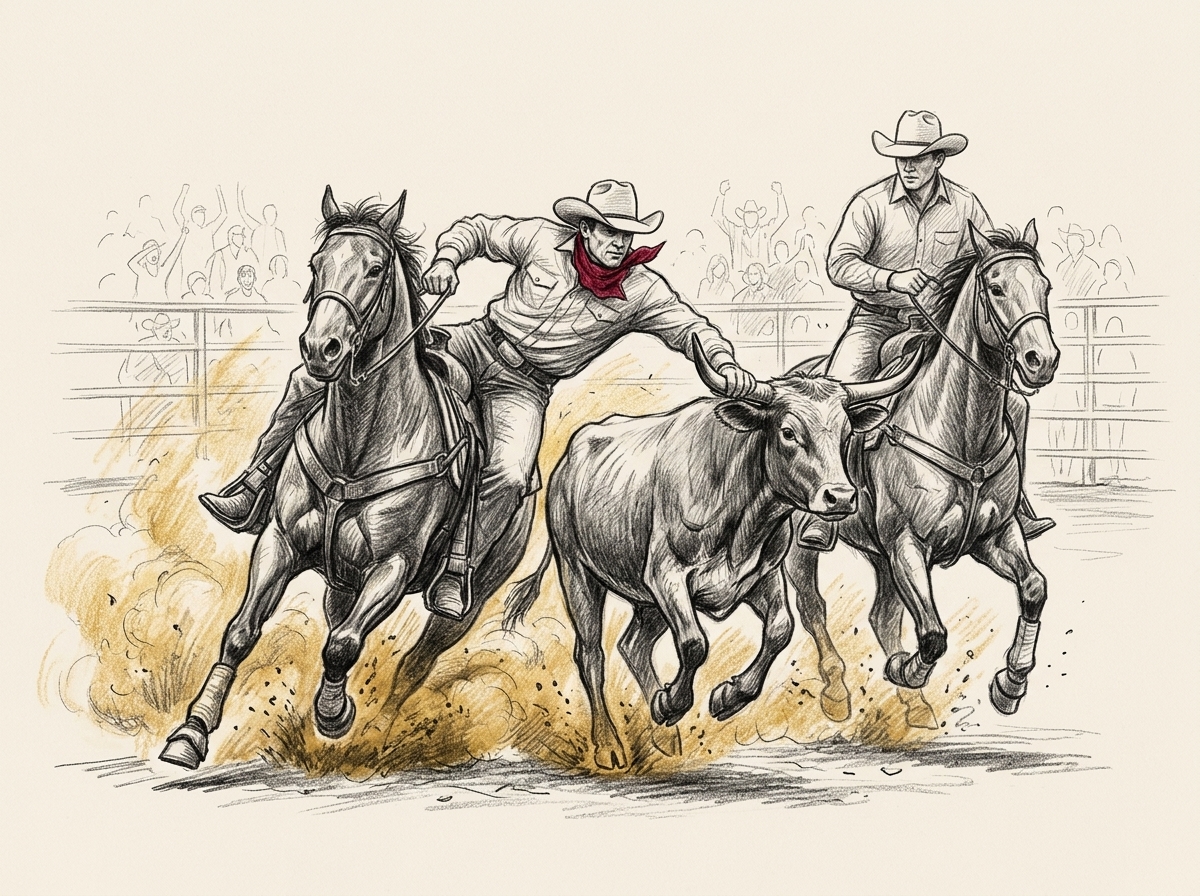
The event invented by Taylor's own Bill Pickett. The "bulldogger" chases a steer on horseback, slides off his galloping horse onto the steer's head, grabs its horns and wrestles it to the ground. A second rider, the hazer, rides on the other side to keep the steer running straight.
How it's scored: Fastest time wins; the steer has to be on its side with all four legs pointing the same way. Good runs take 3 to 5 seconds. Breaking the barrier adds 10 seconds.
 🤝
Team roping
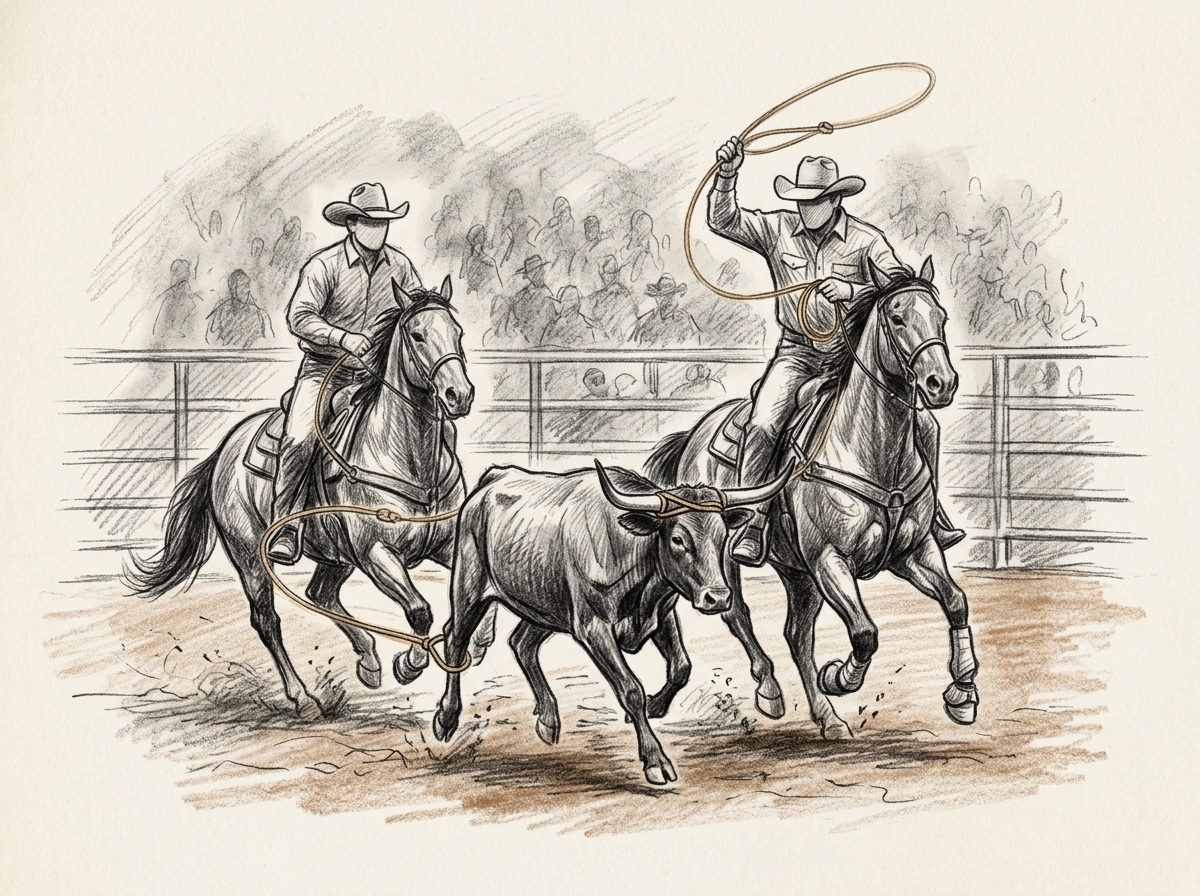
The only team event in rodeo. The "header" ropes the steer's horns and turns it; the "heeler" then ropes both hind legs. Time stops when both ropers face each other with their ropes tight.
How it's scored: Fastest time wins. Catching only one hind leg adds 5 seconds; breaking the barrier adds 10.
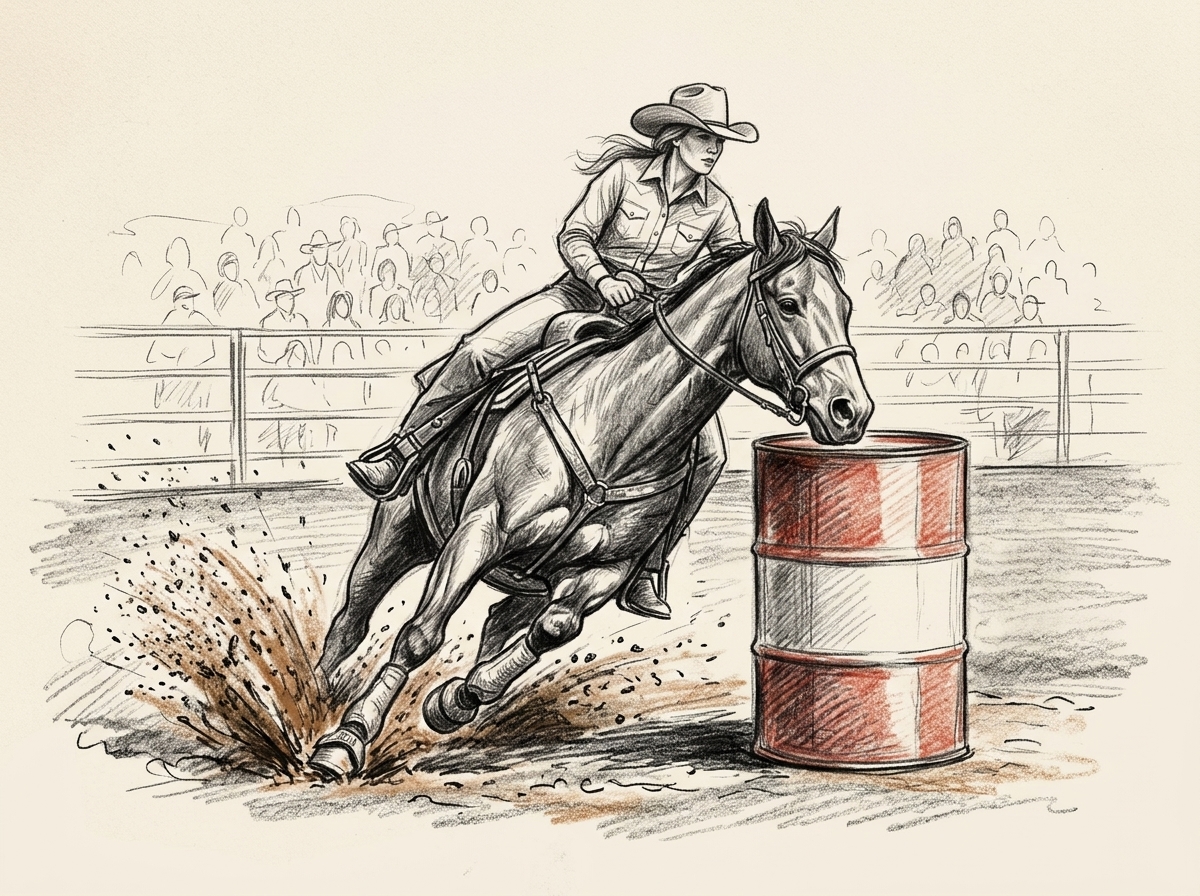 🛢️
Barrel racing
Speed and teamwork between a rider (usually a cowgirl) and her horse. They race a cloverleaf pattern around three barrels and sprint back to the finish.
How it's scored: Fastest time wins, usually in about 14 to 17 seconds depending on the arena size. Knocking over a barrel adds 5 seconds.
Kids' events
Mutton bustin': young kids ride a sheep out of the chute and hang on as long as they can. It opens every rodeo night at the Williamson County Rodeo, and spots fill up fast. Calf scramble: kids race into the arena to grab a ribbon tied to a calf's tail. Details are in our visitor's guide.
Rodeo words to know
- Chute
- The narrow pen the animal and rider start from in the rough stock events. When the cowboy nods, the gate swings open.
- Box and barrier
- In timed events the rider starts in a box. A rope barrier stretches across it and is released when the animal gets a head start. Leave too soon and you get a 10-second penalty.
- Pickup riders
- The two riders on horseback who help bronc and bareback riders off the horse after the whistle.
- Bullfighters
- The athletes who protect bull riders by distracting the bull after the ride. They used to be called rodeo clowns.
- Stock contractor
- The company that raises and brings the bucking horses, bulls, steers and calves. Good bucking animals are valuable athletes and get scored too.
- Slack
- Extra runs held outside the main performance when there are too many contestants to fit in one night.
- Go-round
- One round of competition. Some rodeos average several go-rounds to decide the winner.
- Added money
- Prize money put up by the rodeo, on top of the entry fees contestants pay. More added money draws better contestants.
Rodeo manners for first-timers
- Stand and take off your hat for the grand entry, the flag and the national anthem.
- Cheer for every contestant, especially one who gets bucked off. A big hand for a rider walking out of the arena is rodeo tradition.
- Stay in the stands and behind the fences. Arena areas and the chutes are working areas.
- Bring ear protection for little kids. The arena gets loud.
Frequently asked questions
What events are at the Williamson County Rodeo?
It is a United Professional Rodeo Association (UPRA) rodeo. UPRA rodeos usually include bareback riding, saddle bronc riding, ranch bronc riding, bull riding, tie-down roping, breakaway roping, steer wrestling, team roping and barrel racing. Kids can also compete in mutton bustin' and a calf scramble. The fair posts each night's lineup on its schedule page.
How long does a bull rider have to stay on?
8 seconds. The ride is scored out of 100: up to 50 points for the rider and up to 50 for the bull.
How are rodeo events scored?
There are two kinds. Rough stock events (bareback, saddle bronc, ranch bronc and bull riding) are judged on an 8-second ride, with up to 100 points split between rider and animal. Timed events (roping, steer wrestling and barrel racing) are won by the fastest time, with penalty seconds for mistakes.
What is bulldogging?
Bulldogging is the original name of steer wrestling. It was invented by Bill Pickett, a Black cowboy who grew up in Taylor, Texas.
What is the UPRA?
The United Professional Rodeo Association is a professional rodeo association that sanctions rodeos across Texas and neighboring states, with its season ending at the UPRA Finals in Bryan, Texas.
How long does a rodeo last?
A typical rodeo performance runs about two to two and a half hours. At the Williamson County Rodeo, mutton bustin' kicks off the night before the pro events.
WILCO TX Insider is the Official Media Partner of the Williamson County Fair & Rodeo. Ticket prices, dates and rules come from the fair; always confirm them on the official fair website before you go.